


What to Eat in Vienna: 12 Traditional Foods to Try
Vienna is famous for more than its imperial palaces and classical music. The Austrian capital is also known for its traditional food, rich desserts, and historic coffeehouses. From crispy Wiener Schnitzel to chocolate Sachertorte, the city has plenty of local dishes worth trying.
Traditional Austrian Food to Try in Vienna
Traditional Viennese food includes hearty meat dishes, soups, and simple meals made with local ingredients. Many recipes reflect the history of the former Austro-Hungarian Empire. You can find these dishes in traditional Austrian restaurants, local taverns, and some coffeehouses.
Wiener Schnitzel
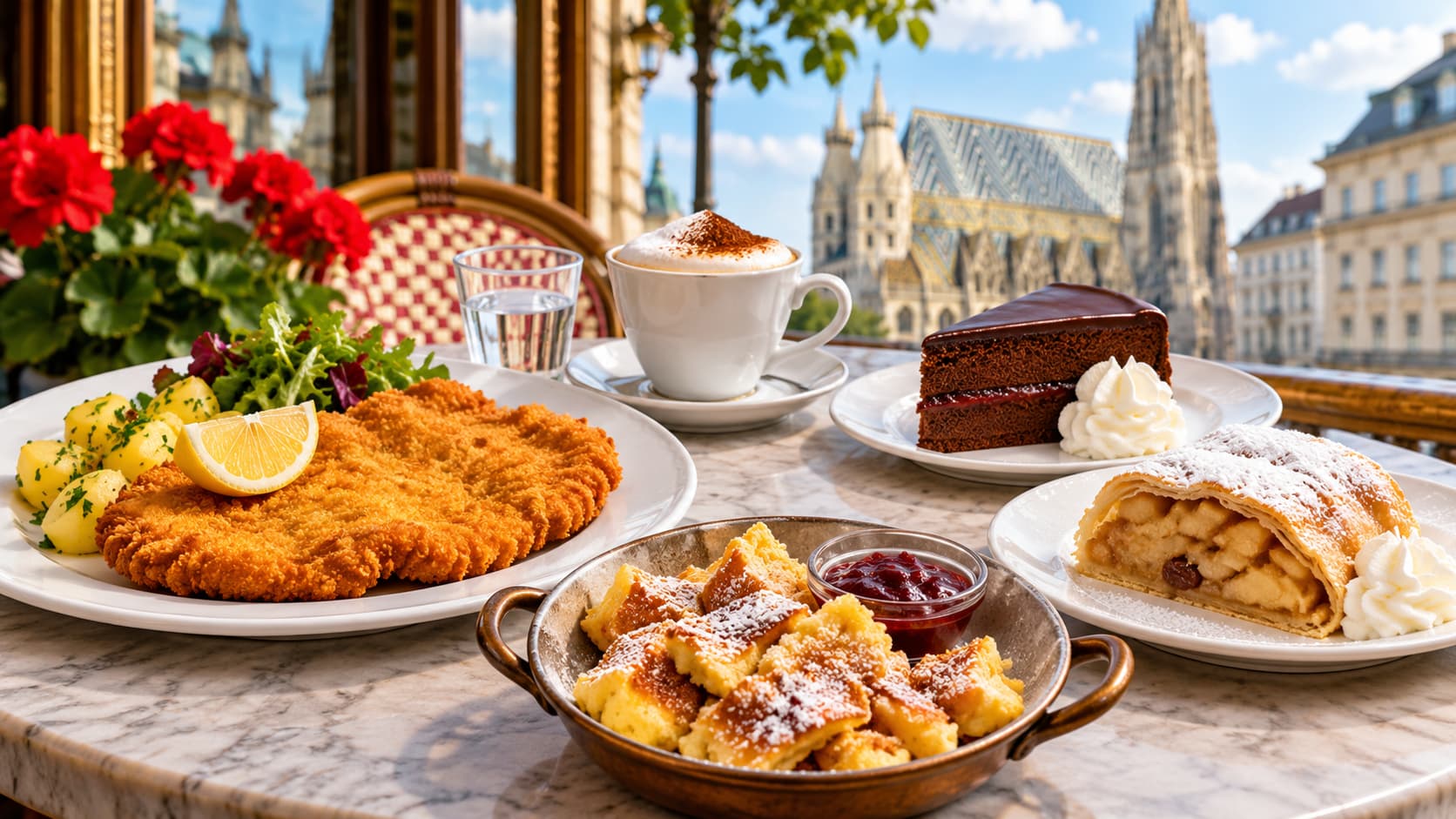
Wiener Schnitzel is one of Austria’s most famous dishes. It consists of thin veal coated in flour, egg, and breadcrumbs, then fried until golden and crispy. It is usually served with lemon and potato salad or parsley potatoes.
Traditional Wiener Schnitzel is made with veal. Some restaurants also serve pork or chicken schnitzel, but these are different versions. You can find this dish in traditional Viennese restaurants throughout the city.
Tafelspitz
Tafelspitz is a classic Viennese dish made from beef slowly cooked in broth with vegetables. The meat becomes tender and is traditionally served with apple horseradish sauce, chive sauce, and potatoes.
This dish was a favorite of Emperor Franz Joseph. Today, it remains a popular choice in traditional Austrian restaurants. It is a good option for travelers who prefer boiled meat over fried dishes.
Wiener Saftgulasch
Wiener Saftgulasch is Vienna’s version of Hungarian goulash. It is a slow-cooked beef stew with onions, paprika, and a rich sauce. The meat is cooked until tender and is often served with bread rolls or dumplings.
Goulash is especially popular during colder months because it is warm and filling. You can find it in many traditional Viennese taverns, known locally as Beisl.
Frittatensuppe
Frittatensuppe is a traditional Austrian soup made with clear beef broth and thin strips of pancake. The pancakes are rolled, sliced, and added to the hot broth before serving.
It is often served as a starter in Austrian restaurants. The soup is light but flavorful, making it a good choice before a larger main course.
Vienna Street Food and Quick Snacks
Not every traditional Viennese meal requires sitting down in a restaurant. The city also has popular street food options for travelers who want something quick and filling.
Käsekrainer
Käsekrainer is a popular Austrian sausage filled with small pieces of cheese. When grilled, the cheese melts inside. It is usually served with mustard, bread, or in a hot dog roll.
You can find Käsekrainer at traditional Vienna sausage stands called Würstelstand. These small food stalls are common in busy areas and offer a convenient meal between sightseeing stops. For a truly local experience, try well-known Würstelstand locations such as Bitzinger Würstelstand near the Albertina Museum and Würstelstand am Hohen Markt, popular with both locals and visitors for their authentic sausages.
Leberkäsesemmel
Leberkäsesemmel is a warm bread roll filled with a thick slice of Leberkäse, a finely ground meat loaf. Despite its name, traditional Leberkäse does not usually contain liver. It is often served with mustard.
You can find this snack at butcher shops, bakeries, supermarkets, and some sausage stands. It is a popular choice for a quick and affordable lunch in Vienna.
For a vegetarian alternative, many bakeries also offer cheese rolls or vegetable strudel. Check the ingredients if you avoid dairy products or eggs.
Traditional Viennese Desserts
Vienna is particularly famous for its cakes and pastries. Many traditional desserts are served in coffeehouses, pastry shops, and restaurants. Some are light afternoon treats, while others can be enjoyed as a complete sweet meal.
Sachertorte
Sachertorte is one of Vienna’s most famous desserts. It is a rich chocolate cake with apricot jam and a dark chocolate glaze. It is traditionally served with unsweetened whipped cream.
Franz Sacher created the cake in 1832. Today, Vienna’s coffeehouses and pastry shops offer different versions. It is a popular choice for visitors who enjoy chocolate desserts.
Apfelstrudel
Apfelstrudel is a traditional apple strudel made with thin pastry, apples, sugar, cinnamon, and often raisins. The filling is wrapped in pastry and baked until golden.
It is commonly served warm, sometimes with vanilla sauce or whipped cream. You can find apple strudel in traditional cafés and restaurants across Vienna.
Kaiserschmarrn
Kaiserschmarrn is a sweet Austrian dish made from thick, fluffy pancakes torn into small pieces. The pieces are lightly caramelized and covered with powdered sugar. It is often served with plum compote or another fruit sauce.
The name is connected to Emperor Franz Joseph and Austria’s imperial history. Kaiserschmarrn can be ordered as a dessert or enjoyed as a sweet main course.
Marillenknödel
Marillenknödel are traditional Austrian dumplings filled with apricots. The dumplings are cooked, then coated in buttery, toasted breadcrumbs and sugar.
They are especially popular during apricot season in summer. Some cafés and restaurants also serve them at other times of the year. They are a good choice for travelers who enjoy fruit-based desserts.
Punschkrapfen
Punschkrapfen is a small Austrian cake covered with bright pink icing. Its filling usually contains cake crumbs, jam, and a rum-flavored mixture.
The cake is sweet and rich in flavor. You can find it in many Austrian pastry shops and coffeehouses. Check the ingredients if you prefer desserts without alcohol.
Palatschinken
Palatschinken are thin Austrian pancakes, similar to French crêpes. They are often filled with apricot jam, chocolate, or sweetened cheese, then rolled and dusted with powdered sugar.
This simple dessert is common in traditional restaurants and coffeehouses. It is a good option for families and travelers who prefer lighter sweets.
What to Drink in Vienna
Vienna has a long coffeehouse tradition. Ordering coffee and cake is an important part of the local food culture, and many cafés offer a wide selection of coffee drinks.
Viennese Melange
A Wiener Melange is one of Vienna’s most popular coffee drinks. It is made with coffee, warm milk, and milk foam, giving it a smooth and mild flavor. Melange is commonly served in traditional Viennese coffeehouses. It pairs well with Sachertorte, Apfelstrudel, and other local pastries.
Einspänner
An Einspänner is a traditional Viennese coffee served in a glass with a generous layer of whipped cream. The cream helps keep the coffee warm and adds a rich taste. It is a good alternative for travelers who enjoy strong coffee with cream rather than milk foam.
Where to Eat Traditional Food in Vienna
Vienna has several types of places where you can enjoy local dishes. The best choice depends on whether you want a full meal, a quick snack, or a traditional café experience.
Traditional Austrian Restaurants
Traditional Austrian restaurants are ideal for trying Wiener Schnitzel, Tafelspitz, and goulash. Many serve generous portions and classic side dishes. Some popular restaurants require reservations, especially during weekends and busy travel seasons.
Viennese Coffeehouses
Vienna’s coffeehouses are known for their relaxed atmosphere, cakes, and coffee specialties. Many also serve breakfast, soups, and traditional meals. They are great places to try Sachertorte, apple strudel, and Wiener Melange. Some historic cafés attract long queues, so allow extra time during peak hours.
Vienna Sausage Stands
Würstelstand food stalls offer quick Austrian snacks, including Käsekrainer and other sausages. They are a convenient choice when you do not have time for a restaurant meal. Some stands remain open late into the evening. Opening hours and available food vary by location.
Naschmarkt
Naschmarkt is one of Vienna’s best-known food markets. It has stalls selling fresh produce, cheese, spices, pastries, and international foods. Restaurants and small eateries are also located around the market. It is a good place for travelers who want to try different foods in one area. The market is near Karlsplatz and Kettenbrückengasse subway stations.
Vegetarian, Vegan, and Gluten-Free Food in Vienna
Traditional Austrian cuisine includes many meat dishes, but Vienna offers vegetarian and vegan options throughout. Travelers with gluten intolerance or other dietary restrictions can also find restaurants offering suitable alternatives.
Vegetarian and Vegan Restaurants
Vegetarians can consider Kaiserschmarrn, Palatschinken, or Käsespätzle, depending on the ingredients. However, these dishes are usually not vegan because they often contain milk, butter, or eggs. For fully plant-based meals, Veggiezz on Opernring offers vegan burgers, bowls, and other casual dishes near the Vienna State Opera. TIAN in the first district offers vegetarian fine dining with vegan menu options. Travelers interested in traditional Austrian food without animal products can also look for restaurants serving vegan versions of schnitzel or goulash. Check the menu before visiting, as not every traditional restaurant offers these alternatives.
Gluten-Free Food in Vienna
Traditional pastries, schnitzel, and many Austrian dumplings contain wheat flour. However, some restaurants offer gluten-free versions of familiar dishes. Restaurant Führich, near the Vienna State Opera, serves traditional Austrian food with gluten-free and vegan options. Allergiker Café in the Wieden district also offers gluten-free cakes and pastries. If you have celiac disease, contact the restaurant before visiting. A gluten-free menu does not always mean the kitchen is completely gluten-free or free of cross-contamination risks.
How to Ask About Dietary Requirements
Restaurant menus often display allergen information, but ingredients and preparation methods can vary. Many restaurants and cafés in central Vienna have English menus available, and staff at most popular spots usually speak English. This can help you explain allergies or dietary needs more easily, even if you don't speak German. Tell staff about serious allergies before ordering and ask whether the kitchen can safely accommodate your requirements. Useful German questions include:
- Gibt es vegane Gerichte? - Do you have vegan dishes?
- Haben Sie glutenfreie Gerichte? - Do you have gluten-free dishes?
- Ist das vegetarisch? - Is this vegetarian?
- Enthält das Milchprodukte? - Does this contain dairy products?
- Ich habe Zöliakie. - I have celiac disease.
Dining Etiquette in Vienna
Dining in Vienna is generally relaxed, but a few local customs are useful to know. Restaurants and traditional coffeehouses usually provide table service, while bakeries and sausage stands often serve customers at a counter. Reservations are expected at many popular restaurants and some historic coffeehouses, especially in the evenings and on weekends, so booking in advance is a good idea. There is usually no strict dress code, but casual neat attire is recommended in most places, and smart casual is appreciated in upscale venues. In coffeehouses, it is common and acceptable to linger over your drink or a book for as long as you like, while in restaurants it is polite to vacate your table once the meal is finished if the place is busy.
Should You Tip in Vienna?
Tipping is customary in restaurants and coffeehouses, but it is not compulsory. A tip of around 5–10% is common when you are happy with the service.
You can round up the total when paying instead of leaving coins on the table. For example, if your bill is €18.50, you could pay €20.
At bakeries, takeaway counters, and sausage stands, tipping is generally less expected. You can round up the bill if you wish, but it is not necessary for every small purchase.
Useful Dining Customs
In traditional Viennese coffeehouses, customers often spend time reading, talking, or enjoying a drink without rushing. A glass of water is commonly served with coffee.
You may hear people say Mahlzeit around lunchtime. This friendly expression is used to wish someone a good meal.
When paying, you can ask for the bill by saying Die Rechnung, bitte. If you want the server to keep the change, say Stimmt so.
Restaurant Reservations in Vienna
Popular restaurants and historic coffeehouses can become busy, especially on weekends and during the Christmas season. Making a reservation can help you avoid long waits. For a regular restaurant, booking one or two days ahead is often reasonable. For well-known dining spots, weekend dinners, or larger groups, consider booking several days to a week ahead.
Some famous coffeehouses operate with walk-in seating or only accept reservations for selected areas and times. Check the restaurant’s booking policy before planning your visit. Most restaurants and cafés in Vienna allow you to reserve a table online through their website or reservation platforms, while some also accept bookings by phone. A few places let you reserve in person if you are already nearby. If you are traveling during Christmas, New Year’s Eve, or a major event, book reservations early.
Seasonal Foods and Food Festivals in Vienna
Vienna’s food scene changes throughout the year. Seasonal ingredients, traditional celebrations, and outdoor markets offer different experiences depending on when you visit.
Spring: Asparagus and Food Festivals
Spring is a popular time for dishes made with fresh asparagus, known in German as Spargel. Restaurants may serve it with potatoes, butter, or hollandaise sauce.
The Genuss-Festival in Vienna’s Stadtpark is a major culinary event traditionally held in May. It brings together Austrian food producers and offers opportunities to sample regional specialties. Check the event dates for your travel year.
Summer: Apricot Desserts and Outdoor Dining
Summer is the best time to find fresh apricots and Marillenknödel. These sweet dumplings are especially popular when apricots are in season. Outdoor dining also becomes more common. The Film Festival at Rathausplatz traditionally features international food stalls alongside its cultural program during summer.
Autumn: Roast Goose and Seasonal Specialties
Autumn brings hearty dishes and seasonal menus to Vienna’s restaurants. Around St. Martin’s Day in November, some restaurants serve Martinigansl, a traditional roast goose dish.
It is often accompanied by red cabbage and dumplings. Autumn is also associated with local wine traditions and roasted chestnuts sold at seasonal stands.
Winter: Christmas Markets and Warm Drinks
Vienna’s Christmas markets offer traditional snacks, pastries, and warming drinks. Popular seasonal treats include roasted chestnuts, gingerbread, and Vanillekipferl, small crescent-shaped vanilla cookies. Christmas markets usually open in November and run through parts of December or early January, depending on the location. The Rathausplatz and Schönbrunn Palace Christmas markets are popular places for seasonal food. Check opening dates and vendor selections before visiting.
Useful German Phrases for Ordering Food in Vienna
Most restaurants in central Vienna are familiar with international visitors. However, knowing a few German expressions can make ordering easier.
If you have a food allergy, explain it clearly rather than relying only on a translated phrase. Restaurant staff should know which ingredients you must avoid.
Tips for Trying Local Food in Vienna
- ✓Start with traditional dishes: Wiener Schnitzel and Tafelspitz are good choices for a first Austrian meal.
- ✓Try local desserts: Sachertorte, Apfelstrudel, and Kaiserschmarrn are popular throughout Vienna.
- ✓Stop at a coffeehouse: Order a Wiener Melange and enjoy a traditional café experience.
- ✓Check dietary requirements: Some dishes contain pork, wheat, dairy products, meat broth, or alcohol.
- ✓Book popular restaurants: Reserve several days ahead when visiting well-known restaurants during busy periods.
- ✓Look for seasonal dishes: Apricot dumplings in summer and roast goose in autumn offer different local food experiences.
- ✓Carry an alternative payment method: Card payments are widely accepted, but having some cash helps at small markets and stalls.
Final Thoughts
Traditional food is an important part of Vienna’s culture. From hearty Austrian meals to famous chocolate cakes, the city offers many dishes for different tastes and budgets.
Start with Wiener Schnitzel or Tafelspitz, then enjoy a local dessert with coffee. Allow time to experience a traditional coffeehouse, try seasonal specialties, and sample snacks at Vienna’s local markets.
You can also read our guide to what Vienna is famous for to learn more about the city’s culture and traditions.
Frequently Asked Questions
Vienna is best known for Wiener Schnitzel, Tafelspitz, Sachertorte, and Apfelstrudel. These dishes are widely served in traditional Austrian restaurants and coffeehouses.
A typical Austrian breakfast includes bread rolls, butter, jam, cheese, and coffee. Popular breakfast spots in Vienna include Café Sperl, Café Landtmann, and Joseph Brot.
Sachertorte and Apfelstrudel are among Vienna’s best-known desserts. Kaiserschmarrn is another popular sweet dish served in restaurants and cafés.
Vienna’s sausage stands, bakeries, and supermarket food counters offer affordable meals. Sausages and sandwiches often cost around €3–€5, while a filling snack or simple meal may cost €5–€9.
Many traditional Viennese dishes contain meat, but vegetarian options are available. Käsespätzle, Palatschinken, and some potato-based dishes can be suitable, depending on their ingredients.
Yes. Veggiezz offers vegan meals, while Restaurant Führich has gluten-free and vegan options. Travelers with celiac disease should confirm ingredients and preparation methods before ordering.
Tipping is customary but not required in Vienna. Leaving around 5–10% for good service is common, while tipping at bakeries and takeaway stands is optional.
Try asparagus dishes in spring, apricot dumplings in summer, and roast goose in autumn. Winter is known for gingerbread, roasted chestnuts, and traditional Christmas market treats.
Say “Ich hätte gern …” when ordering and “Die Rechnung, bitte” when asking for the bill. For dietary requirements, you can ask “Haben Sie glutenfreie Gerichte?” for gluten-free options.